One challenge I see when organizing anything is deciding what items should go together. In a close second, where to put those items.
This guide answers the age-old question: how do you categorize your clothes in your closet?
Let’s start with why we group items together and break down into categories to group things together.
And then we will go into some logical places you can store those items.
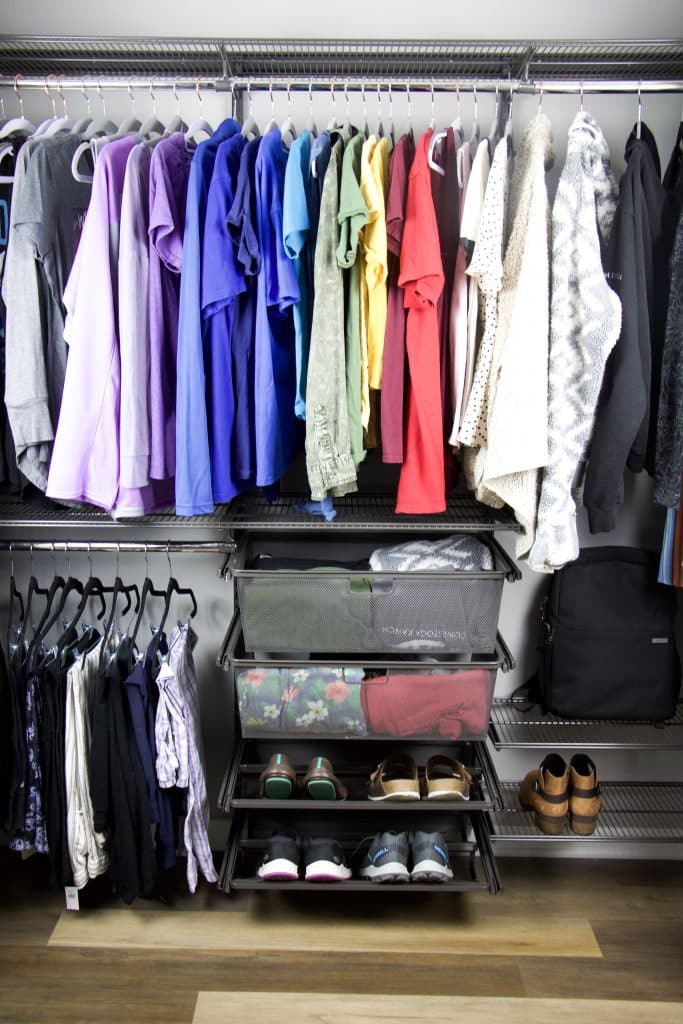
Why We Categorize Your Clothes
Grouping is the secret sauce of an organized closet. When you decide on categories that make sense for your lifestyle, you:
- Save time: No more morning rummages looking for that perfect tee.
- Reduce stress: Your space looks calm, and your brain feels calmer, too.
- Maintain order: Once the categories are set, it’s easy to put things back in their “home.”
Clothing Categories You May Have
When you’re creating categories for your wardrobe, lean into how you think about your clothes. Do you reach for items by color? By fabric? By activity? Mix and match these lists, or pick one style that feels right.
Categorize By Function / Activity
- Athletic
- Lounge
- Travel
- Workwear
- Pajamas
By Season
- Winter
- Summer
- Transitional (Spring/Fall)
By Item Type
- T-Shirts
- Long-Sleeves
- Tank Tops
- Sweaters
- Hoodies
Categorize By Bottoms
- Pants
- Shorts
- Leggings
- Skirts
By Underthings
- Bras
- Underwear
- Socks
Group By Special Accessories
- Scarves
- Hats
- Belts
- Swimwear
- Bags & Purses
- Shoes
By Color (if you’re a color-coordinator)
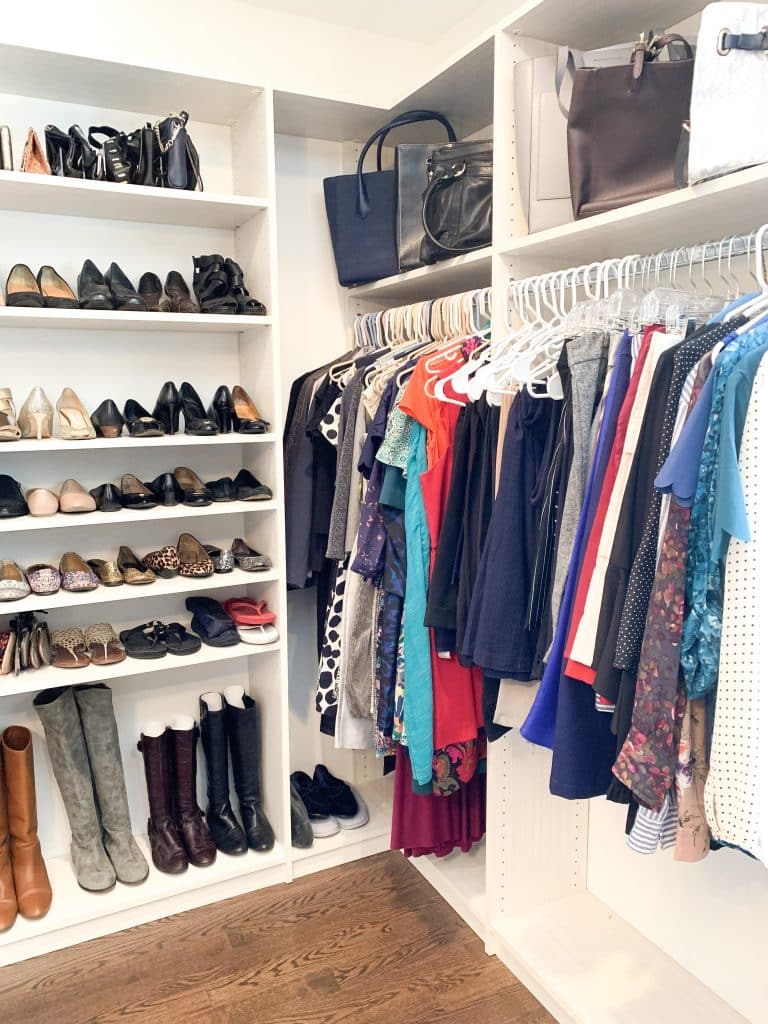
- Neutrals (black, white, gray)
- Brights
- Pastels
- Prints/Patterns

Where To Store Clothing Items
Once you’ve got your categories, it’s time to find a home for each. Here are some easy, practical spots:
1. Hanging Rods
- Everyday Tops & Dresses: Keep T-shirts, blouses, and dresses on a rod at eye level. Use matching hangers to keep it streamlined.
- Workwear & Special Pieces: If you have room, dedicate one rod to nicer tops or blazers so they don’t get lost in the everyday shuffle.
2. Shelves or Cubbies
- Sweaters & Hoodies: Fold and stack on a shelf—nohanger-crush here!
- Jeans & Pants: Neatly folded and stacked, so you can see each pair at a glance.
3. Drawers
- Underthings & Socks: Use drawer dividers to keep bras, underwear, and socks sorted.
- Tank Tops & Tees (if you have the drawer space): Roll or file-fold for maximum visibility.
4. Baskets or Bins
- Seasonal Items: Off-season shoes, swimwear, or scarves can live in labeled bins on a high shelf or under the bed.
- Accessories: Smaller baskets for belts, hats, or scarves keep them contained and easy to find.
5. Shoe Racks or Clear Boxes
- Shoes: A tiered rack by the door or clear, stackable boxes will let you grab that pair of sneakers without digging.
6. Over-the-Door Organizers
- Bags & Purses: Hooks or pockets over the door keep straps from tangling and free up shelf space.
- Scarves & Belts: Slim organizers with loops to slip items through—easy visibility and zero wrinkles.
How Do You Categorize Clothes In Your Closet
- Pick your primary grouping style (function, season, color, etc.).
- Make your category list—keep it to 8–12 groups max so it’s manageable.
- Assign each group a home in your closet or drawers.
- Label if that helps! Even a piece of washi tape on a shelf edge can work wonders.
- Maintain weekly: A quick 2-minute check to return stray items keeps your system intact.
More Closet Organizing Posts You Will Enjoy
The Hanger Trick For Your Closet– walking through how to decide if a piece of clothing is worth saving by flipping the hanger.
How To Declutter A Closet– step by step guide to declutter a closet
Step-By-Step ADHD Closet Decluttering Tips– focusing on smaller projects when decluttering your closet