
We Tried the Scandinavian Sleep Method—Here’s What Happened
Here’s a crazy thought, what if each individual in a bed has their own blanket that was just for them. No sharing with their partner. No tugging or tossing during…

Are you struggling to find space in your small kitchen without cabinets? Don’t fret! In this article, we’ll share clever organization ideas that will maximize the space in your compact kitchen and make it more functional and efficient. Small kitchen without cabinets One of the key challenges in a kitchen without cabinets is finding places […]

Are you struggling to find space in your small kitchen without cabinets?
Don’t fret!
In this article, we’ll share clever organization ideas that will maximize the space in your compact kitchen and make it more functional and efficient.

One of the key challenges in a kitchen without cabinets is finding places to store all your essentials. From pots and pans to utensils and spices, it’s important to find creative solutions that optimize every inch of space available.
Whether you have open shelves, limited counter space, or a tiny pantry, we’ve got you covered. Our organization ideas will show you how to make the most of vertical space, utilize unused areas, and create customized storage solutions that fit your specific kitchen layout.
Say goodbye to cluttered countertops and overflowing drawers. With these innovative tips and tricks, you’ll transform your small kitchen into a well-organized haven where everything has its place. Get ready to cook and entertain with ease, even in the smallest of spaces. Let’s dive in and maximize the potential of your kitchen!
One of the most effective ways to maximize storage in a small kitchen without cabinets is to utilize the vertical space. When you’re limited on square footage, looking up can provide ample opportunities to tuck away your essentials.
Floating shelves are a game-changer in a cabinet-free kitchen. These sleek, minimalist shelves can be installed at various heights, allowing you to create a customized storage solution that fits your specific needs.
Use the top shelves for less-frequently used items, such as seasonal kitchenware or decorative pieces, and reserve the lower shelves for your daily-use items.
This keeps your most-needed supplies within easy reach while maintaining an uncluttered, organized look.
Another brilliant way to utilize vertical space is with a pot rack or hanging rail system.
Suspending your pots, pans, and utensils from the ceiling or wall frees up precious cabinet and counter space. Look for racks with multiple levels or hooks to maximize the storage potential. Arrange your cookware by size or frequency of use, ensuring the items you reach for most are the easiest to access.
This not only saves space but also creates a visually appealing, restaurant-inspired aesthetic in your kitchen.
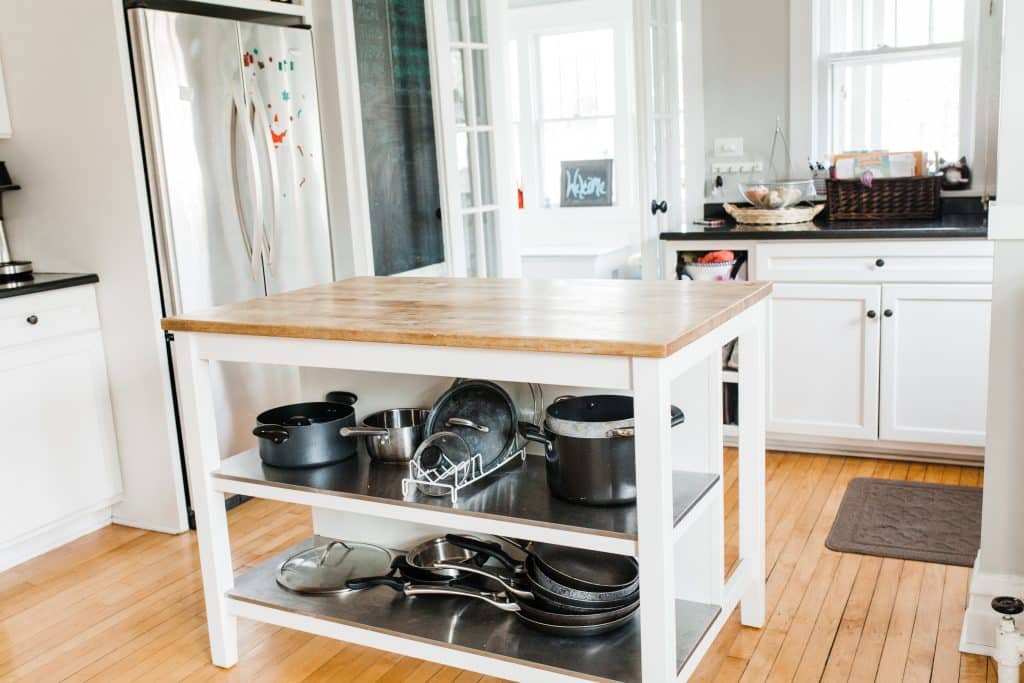
When you’re working with a small kitchen sans cabinets, it’s essential to get creative with your storage solutions. Look beyond the traditional and explore innovative ways to tuck away your essentials.
One clever idea is to use pegboards or magnetic strips to organize your spices, herbs, and small tools.
Mounting these on the walls or the inside of cabinet doors allows you to keep your most-used seasonings and gadgets within arm’s reach while freeing up valuable counter and drawer space. Arrange the items in a visually appealing way, grouping similar items together for easy access.
Another smart solution is to invest in stackable or modular storage containers. These versatile bins and jars can be stacked, nested, or arranged in a way that maximizes the available space.
Label the containers clearly, and group them by category, such as baking supplies, canned goods, or snacks. This not only keeps your kitchen organized but also makes it easy to see what you have at a glance.
Repurposing everyday items can also be a game-changer in a small kitchen.
Utilize wall-mounted mason jars or vintage canisters to store dry goods, utensils, or even small produce. The transparent nature of these containers allows you to easily identify the contents, while the unique designs can add a touch of character to your space.
Open shelving is a popular choice for small kitchens without cabinets, as it provides both storage and visual interest.
When implemented correctly, open shelves can create the illusion of a larger, more airy space.
Begin by assessing the layout of your kitchen and determining the best placement for your open shelves. Consider the height, depth, and number of shelves that will work best for your needs. Opt for shelves that extend from wall to wall or corner to corner to maximize the available space.
When styling your open shelves, group items by category or color to create a cohesive, visually appealing display.
Place your most-used items, such as everyday dishes, mugs, and frequently accessed pantry staples, on the lower shelves for easy access. Reserve the upper shelves for less-frequently used items or decorative accents that can add character to your kitchen.
To keep your open shelves looking neat and organized, consider incorporating baskets, bins, or decorative boxes to corral smaller items. This not only adds visual interest but also helps to conceal the clutter and maintain a clean, streamlined appearance.
Experiment with different shelf heights and depths to accommodate a variety of items, from tall vases to shallow spice jars.

In a small kitchen without cabinets, the space under the sink is often an overlooked area that can be transformed into valuable storage. With a little creativity and organization, you can turn this often-neglected space into a functional and efficient storage solution.
Begin by assessing the available space and measuring the area to determine the best storage options.
Consider installing a pull-out drawer or a series of shelves to maximize the vertical space. These customizable storage solutions can be tailored to fit your specific sink and plumbing configuration, ensuring a seamless and organized look.
When organizing the space under the sink, group items by category to maintain a tidy and efficient system.
Dedicate one area for cleaning supplies, another for kitchen towels and sponges, and a third for any extra pantry items or small appliances. Use clear plastic bins or labeled containers to keep everything neatly contained and easy to access.
Don’t forget to utilize the doors or the side panels of the sink cabinet, if applicable.
Hang small baskets, hooks, or magnetic strips to store items like sponges, scrubbers, or even small spice jars. This helps to keep the main storage area under the sink clutter-free and organized.
In a small kitchen without cabinets, finding a place to store your pots, pans, and cooking utensils can be a challenge. However, with some clever organization techniques, you can create a streamlined and efficient system that keeps your essential cookware within easy reach.
One effective solution is to utilize wall-mounted pot racks or hanging rails. These versatile storage options allow you to suspend your pots and pans from the ceiling or wall, freeing up valuable cabinet and counter space.
Arrange the cookware by size or frequency of use, ensuring the items you reach for most are the most accessible.
Another innovative idea is to invest in a rolling kitchen cart or a portable island. These multi-functional pieces of furniture can provide additional storage for your pots, pans, and utensils, as well as extra counter space for food preparation.
Look for carts with built-in shelves, drawers, or even pegboards to maximize the storage potential.
If you have limited wall space, consider using the inside of cabinet doors or the back of a pantry door to hang your cooking tools.
Install a series of hooks or magnetic strips to keep your most-used spatulas, ladles, and tongs within easy reach. This clever solution keeps your countertops clear while ensuring your essential tools are always at hand.
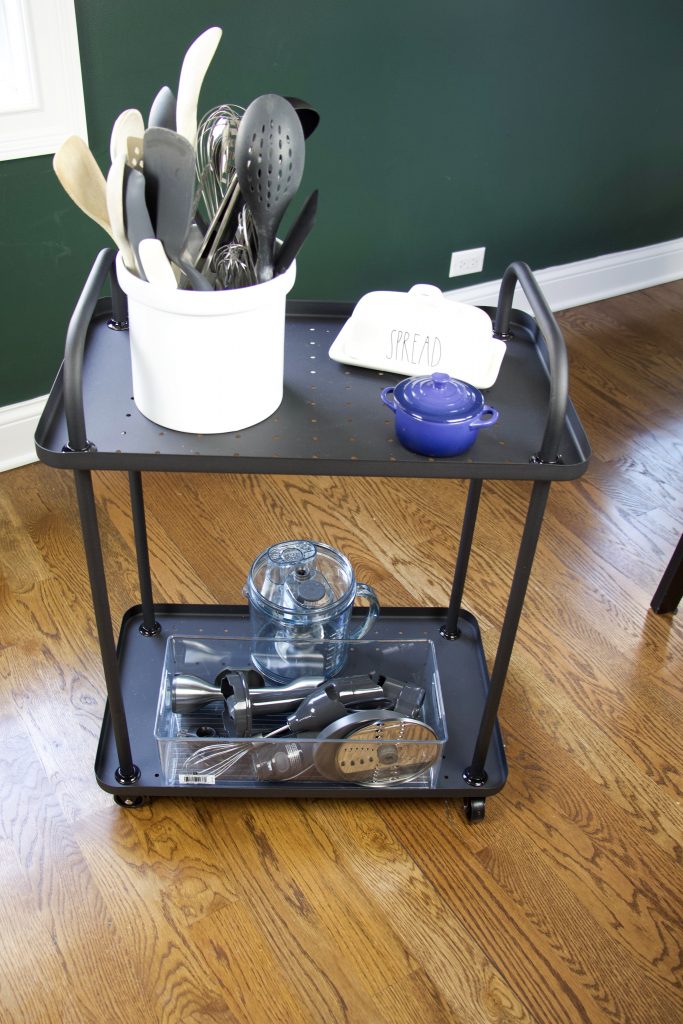
In a small kitchen without cabinets, a well-organized pantry can be a game-changer.
Whether you have a dedicated pantry room or a compact pantry cabinet, maximizing the storage potential in this space can make a significant difference in the overall functionality of your kitchen.
Begin by assessing the available space and identifying any unused areas or nooks that can be transformed into storage.
Consider installing adjustable shelves or pull-out drawers to create a customized storage system that caters to your specific needs. This ensures you can make the most of every inch of the pantry, from floor to ceiling.
Utilize clear containers, jars, and baskets to store your dry goods, canned items, and other pantry staples. Not only does this keep everything neatly organized, but it also allows you to easily see what you have in stock.
Label the containers clearly and group items by category, such as baking supplies, breakfast items, or snacks, for quick and efficient access.
Don’t forget to maximize the vertical space in your pantry as well. Install wall-mounted shelves or racks to store items like spices, oils, and small appliances. This frees up valuable floor space and ensures that your most-used items are within easy reach.
Consider adding a pegboard or magnetic strips to the back of the pantry door to hang utensils, measuring cups, or other small tools.
When working with a small kitchen without cabinets, it’s essential to find furniture and storage solutions that serve multiple purposes.
Investing in pieces that offer both form and function can help you maximize the limited space and create a cohesive, organized look.
One versatile option is a kitchen island or rolling cart. These pieces can provide additional counter space for food preparation, as well as storage for pots, pans, and other kitchen essentials.
Look for islands with built-in shelves, drawers, or even a wine rack to customize the storage to your needs. If space is extremely limited, opt for a compact, narrow island that can tuck neatly into a corner or against a wall.
Another multi-functional piece to consider is a butcher block or wooden cutting board that can double as a prep surface and a serving tray. These versatile items can be placed on the counter or even mounted on the wall when not in use, freeing up valuable workspace.
Pair them with a set of magnetic knife strips to keep your most-used blades within easy reach.
Investing in a set of nesting bowls or stackable containers can also be a game-changer in a small kitchen.
These space-saving solutions allow you to store multiple items in a single footprint, making the most of your limited cabinet and drawer space. Look for options with lids to keep your dry goods and pantry staples fresh and organized.
Maintaining a clutter-free small kitchen without cabinets can be a constant challenge, but with the right strategies, you can keep your space organized and functional.
One key tip is to regularly purge your kitchen of items you no longer use or need.
Go through your cookware, utensils, and pantry items, and donate or recycle anything that doesn’t serve a purpose in your current cooking and entertaining routines. This not only frees up valuable storage space but also helps to prevent the accumulation of unnecessary clutter.
Invest in a few key organizational tools, such as drawer dividers, spice racks, and stackable storage containers, to keep your small kitchen essentials neatly contained and easily accessible.
These solutions can transform cluttered drawers and crowded countertops into streamlined, efficient workspaces.
Embrace the minimalist approach and limit the number of decorative or non-essential items in your kitchen.
Stick to a few carefully chosen pieces that add visual interest without overwhelming the space. Use your open shelves or countertops to display only the most frequently used items, keeping the rest tucked away in your storage solutions.
Finally, make a habit of regularly tidying and maintaining your small kitchen.
Take a few minutes each day to wipe down surfaces, put away any stray items, and ensure that everything is in its designated place. This proactive approach will help you avoid the buildup of clutter and keep your kitchen looking and functioning at its best.
With the right organization strategies and creative storage solutions, you can transform your small kitchen without cabinets into a functional and efficient workspace.
By utilizing vertical space, implementing open shelving, and incorporating multi-purpose furniture, you can maximize the available storage and create a kitchen that is both visually appealing and highly practical.
Remember, the key to success in a cabinet-free kitchen is to think outside the box and explore innovative ways to tuck away your essentials.
From pegboards and magnetic strips to rolling carts and stackable containers, the possibilities are endless when it comes to keeping your small kitchen organized and clutter-free.
By implementing the strategies outlined in this article, you’ll not only gain more usable space but also streamline your cooking and entertaining routines.
Say goodbye to the days of cluttered countertops and overflowing drawers, and hello to a well-organized kitchen that caters to your unique needs and style preferences.
Embrace the challenge of a small kitchen without cabinets and let your creativity shine.
With a little planning and the right organizational tools, you can create a space that is both functional and visually appealing, making the most of every square inch.
So, roll up your sleeves, and let’s get started on transforming your kitchen into the organized oasis you’ve been dreaming of.

Kitchen and Pantry: Organizing Strategies For The Spaces You Eat
5 Pots And Pan Storage Ideas For Any Size Kitchen
Declutter Like a Pro : Have The Clutter-Free Home Of Your Dreams


