How To Get Kids To Organize
Back when I was teaching, I feel like half my class could keep their desks and cubbies organized. And the other half couldn’t. So I had to teach them some…
In this post, I’m talking about skills to get kids organized. We’re figuring out how to learn from home. How can you get organized and have the kids help?
I get a lot of questions—especially in my Facebook group—about how to help kids build lasting organization habits.
The good news?
Organization is a skill, and just like riding a bike, it can be learned, practiced, and improved over time.
When kids develop these skills early, they not only manage their schoolwork better, but also become more independent, confident, and prepared for life.
Here are five essential organization skills kids can start practicing today.

Help your kids choose their top three lessons or activities for the day. This teaches them how to identify what’s most important and avoid overwhelm.
For example, my daughter once listed 12 things she planned to do in a single morning. We worked together to narrow it down to three realistic goals—something I also do for myself when organizing my own day.
Skill Focus: Decision-making and time management.
Some kids thrive with checklists, others with flowcharts, and younger kids often respond best to picture schedules. These tools give kids a tangible way to track their progress and see what comes next.
Picture schedules, in particular, help children recognize routines—just like they do at school—and reduce the mental load of remembering every step.
Skill Focus: Planning and sequencing tasks.
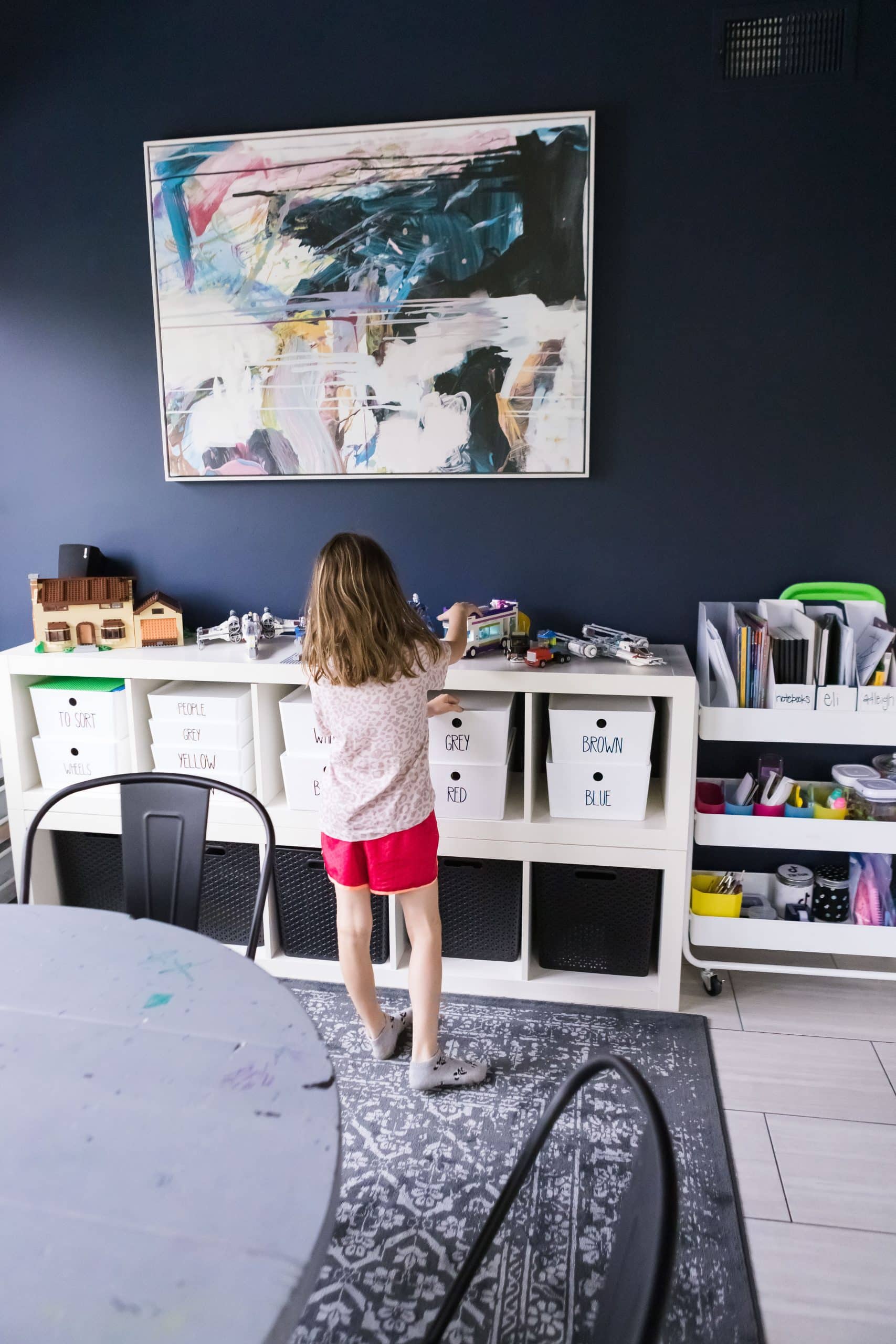
Defining areas in your home for specific activities helps kids mentally “switch gears” and stay focused.
For example:
Even if space is limited, using a small basket or tray to hold all the materials for one activity can create a portable “zone.”
Skill Focus: Environmental organization and focus.
Toddler to Elementary-Aged Kids And Organizing
The Best Responsibility Chart For Kids

Supports can be both visual (timers, schedules) and physical (fidget tools, gum for focus). For older kids, modeling is incredibly effective—let them see you work, manage your time, and stay on task.
Adding elements like calming music or a clear start/stop signal makes it easier for kids to tackle tasks they find challenging.
Skill Focus: Self-regulation and persistence.
Sometimes the best teachers are other kids. That’s why I created The Organized Kids Academy, where my own kids teach organizational skills through fun, step-by-step lessons.
The full course is available for $27—perfect for helping kids learn directly from role models their own age.
Skill Focus: Peer learning and independent application.