
We Tried the Scandinavian Sleep Method—Here’s What Happened
Here’s a crazy thought, what if each individual in a bed has their own blanket that was just for them. No sharing with their partner. No tugging or tossing during…

Life as a parent is a beautiful whirlwind of laughter, wonder, and, well, chaos. This beginner’s guide to organizing is here to help you tame the beast of clutter so you can organize your home with ease. Section 1: The Art and Science of Home Organization Before we break a sweat tidying up, it’s crucial […]
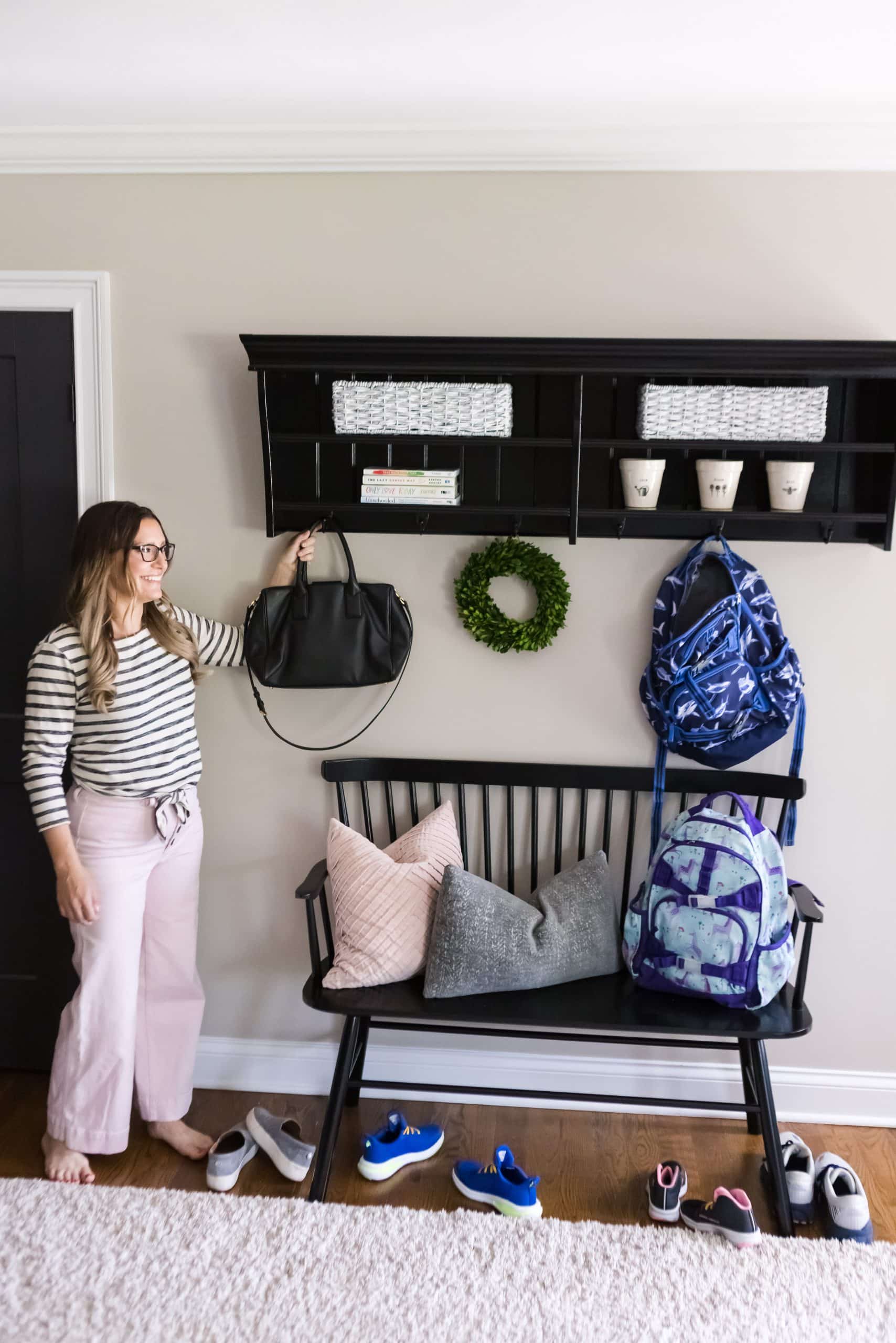
Life as a parent is a beautiful whirlwind of laughter, wonder, and, well, chaos. This beginner’s guide to organizing is here to help you tame the beast of clutter so you can organize your home with ease.

Before we break a sweat tidying up, it’s crucial to understand the impact that order, or its absence, can have on the psyche of both parents and kids alike.
Organized spaces foster a calm environment and a conducive atmosphere for bonding.
Here, we’ll give you a quick glimpse into the various ways that an organized home can transform your family’s experience.
We’ll touch on time-saving aspects, the reduction of stress and frustration, and the positive space it creates for nurturing relationships. Armed with this knowledge, you’ll be inspired to kick off your journey to a more organized family life.
Time is of the essence for busy parents and new moms, so it’s no surprise that any strategy that reduces time spent on household tasks is highly sought after.
Being organized means having everything in its place, making it easy to find and use when needed.
Whether it’s a well-organized pantry that speeds up meal prep, or a streamlined system for laundry and toy storage, an organized home saves time in multiple ways.
With less time spent searching for items, cleaning up clutter, and trying to remember where you put things, you’ll have more time to spend with your family or pursuing other interests.
More Posts You May Love
30 Ultimate Clutter Hacks You Have To Try
Time Blocking For Moms Workbook

It’s no secret that a cluttered and chaotic space can cause stress and anxiety.
Trying to navigate through piles of belongings or constantly feeling overwhelmed by the mess can be draining on both parents and children.
On the other hand, an organized home promotes a sense of calm and control.
With everything in its designated place, there is less mental clutter to contend with, leading to increased productivity and a more peaceful atmosphere.
More Tips You May Love For Beginner’s Guide To Organizing
Peak Productivity: Unleashing Your Full Potential
7 Effective Techniques For Building Executive Skills
Time Blocking For Moms Workbook
An organized home not only saves time and reduces stress, but it also creates a positive environment for nurturing relationships.
Without the constant distraction of clutter and disorganization, families can focus on spending quality time together.
A tidy living space also makes it easier to entertain guests or have impromptu playdates with other families. This can lead to stronger social connections and a sense of community.
While it may seem like a daunting task, involving children in the organization process can be an opportunity for teaching valuable life skills.
By instilling good habits at a young age, children will learn to take care of their belongings and contribute to maintaining an organized home.
Organizing also involves problem-solving and critical thinking skills, as well as decision-making and time management.
These are all important skills that children can carry with them into adulthood.
More Posts You Will Love
Executive Thinking Skills: Effective Ways To Build Skills At Home
7 Effective Techniques For Building Executive Skills
Boosting Brain Power: Why Executive Function Is Important and How to Improve It
Another benefit of an organized home is the positive impact it can have on the environment.
By keeping your belongings organized and decluttering regularly, you will likely consume less and reduce waste.
This can also lead to a more sustainable lifestyle, which is important for the health of our planet.

The beginning of any major change involves tackling the fundamentals.
For a home organization project, the basics include decluttering techniques and the proper use of planning aids.
We’ll guide you through first steps, providing detailed advice on parting with possessions that no longer serve you, and introduce a powerful tool that will soon become your home organization sidekick.
This is your launchpad for orderliness, and we’ll hold your hand through the steps.
We understand that sometimes the biggest hurdle is simply starting, and we’re here to help you push that boulder uphill one step at a time.
Decluttering doesn’t have to mean gutting your home all at once.
Start small — maybe a drawer a day.
This approach not only prevents overwhelm but also sets the stage for long-term success.
When decluttering, you want to remove things that no longer serve your needs. These could be old clothes, old toys, kitchen gadgets you thought you’d use. Anything that was once a need but no longer works in your home.
When you reframe clutter by removing what you no longer need, it takes the stress out of decluttering.
More Posts On Decluttering
Micro-Decluttering: Why You Should Try An Easier Version Of Decluttering
Embracing the Minimalist Lifestyle With Micro-Decluttering
Declutter Like a Pro : Have The Clutter-Free Home Of Your Dreams
Picture this: a customizable, visual command center that lays out tasks, appointments, and to-dos in a clear, digestible way.
Family planning boards might be the missing piece of your organizational puzzle.
Learn the best practices for set-up, what to include, and how it can evolve with your family’s needs.
Once the gears of basic organization are turning, it’s time to fine-tune your approach for maximum efficiency.
Daily routines and spaces within your home can be optimized to save you precious minutes in your day, which quickly add up to quality family time.
Kids thrive on routine, and structured days can be a game-changer for parents too.
Creating morning and bedtime routines will help everyone stay on track.
Approaching housework and errands with a schedule in mind slashes the feeling of constant catch-up.
More Posts You Will Love
How To Completely Change Your Kids Daily Routines
The Lazy Parents’ Guide To Creating A Schedule For Kids
How To Create A Schedule For Stay-At-Home Moms
Meal planning is the busy parent’s best friend.
First, start with what you have. Look around the pantry, fridge and freezer. Do you have a pound of ground beef in the freezer? A bunch of tomatoes from the garden?
Making use of what you have saves money and gives you a starting place for your meal plan.
The next important step is to check your calendar for any important dates.
For example, if it’s your husband’s birthday next week you might want to make a special meal. Or maybe you’ll go out to dinner – that’s one less meal to plan for.
It’s tempting to dive headfirst into your cookbooks. But let’s be realistic. We all need easy, quick meals during the week.
Pick a couple easy favorites that don’t require a recipe. Think scrambled eggs, spaghetti, hamburgers or whatever you like to make.
Now’s your chance to add some variety. Already serving beef? Add chicken, fish and vegetarian meals to your plan. Find yourself making a lot of broccoli? Try cauliflower one night instead. You can also vary the flavors.
For example, if you make a lot of Italian food, try a Chinese dish. Pinterest is a really useful tool for finding new ideas. You can see the recipes I’m using in my own meal plans right here.
Choose a few recipes that you can easily double, like chili or tacos. Leftovers can be built into your plan for another night of the week or for lunches to make things easy and more manageable.
Finally, go through each meal and note the ingredients you’ll need on a shopping list. Make sure to shop your own pantry first!
Otherwise you might buy yet another jar of cinnamon because you forgot you already had some!
An organized pantry can make or break the speed and success of your weekly meal prep.
Organizing a pantry takes some time.
Group like items together and store them like you would find at a grocery store.
Use my Pantry Organizing eBook :: Organize Your Space eBook Series to help you customize your pantry to your needs!

Now that your planning and execution are in sync, it’s time to tackle the actual spaces in your home.
We’ll focus on common areas, playrooms, and children’s bedrooms, as each comes with its own organizing challenges and solutions.
The living room, dining area, and other communal areas are the family’s center. Which is why we call them “shared spaces”.
These shared spaces deserve a different type of approach to organizing.
The first step is to remove anything that doesn’t believe in the shared space. Is the item necessary for the space? if not, remove them! This can be furniture, art, books, trinkets, etc.
The next step is to reduce visual clutter in the space by grouping like items together, or grouping like colors together.
The final step is to teach your family how to maintain the organization. This is the biggest piece of organizing shared spaces.
I know it is so much easier said that done. To help combat feeling overwhelmed, start small!
More Posts You May Love:
Organizing Tune-Ups – Episode 10: How To Organize Shared Spaces
How To Quickly Declutter Your Living Room
6 Creative Ways To Organize Toys In The Living Room
Toys — loveable, chaotic clutter machines.
We’ve got playroom solutions to keep your child’s imagination sparked and the room tidy enough for impromptu living room dance parties.
Learn how to involve the kids and create zones that make sense.
Start by minimizing the toys! When you have less toys, it sparks more imagination.
More Ways To Organize Playrooms
8 Rookie Mistakes You Make When Setting Up A Playroom
Playroom Organization The Pros Don’t Want You To Know
5 Transformation Tips For Playroom Ideas On A Budget
A lack of square footage doesn’t have to mean a dearth of storage solutions.
We’ve gathered the best tips for organizing a small space, from vertical storage tactics to the magic of multipurpose furniture.
You’ll begin to see the potential in every nook and cranny.
Read more on how to maximize storage:
The Best Ever Solution For Toy Storage of Action Figures
Maximizing Your Space: Sideboard Storage Ideas
Practical Tricks For Space-Saving Board Game Storage
3 Budget-Friendly Storage For Toys Ideas
20 Storage Bins To Help You Organize
Even the most organized home requires upkeep, and we understand that life’s many detours can often lead to the abandonment of new habits.
Here, our focus is on setting in place practices that help maintain an organized environment and make occasional touch-ups a breeze.

Organization is a living, breathing ecosystem within your home, responding to the changing seasons and needs of your growing family.
This means that you may want to reorganize a space as your family grows.
Maybe your space isn’t working due to new furniture or a new way of living in your home.
This means that you have to approach organizing in a new way.
Start by looking at what is working. When starting with what is working, you are able to find the areas that aren’t working as well based on what you find effective.
Then make small changes to what isn’t working. This means that you may need to change the location of a drop zone or move where you store your shoes due to the new way of using a space.
By making small changes as your family grows, allows you to use what works and tweak what isn’t working.
More posts you will love
How To Make Labels For Organizing
Organizing 101: How To Organize Like A Pro

Organization is a team sport, especially in a family setting.
We offer approaches for teaching kids the value of order and the pleasure of a tidy space.
Case in point, there’s pride to be found in a well-made bed each morning, even for the littlest of family members.
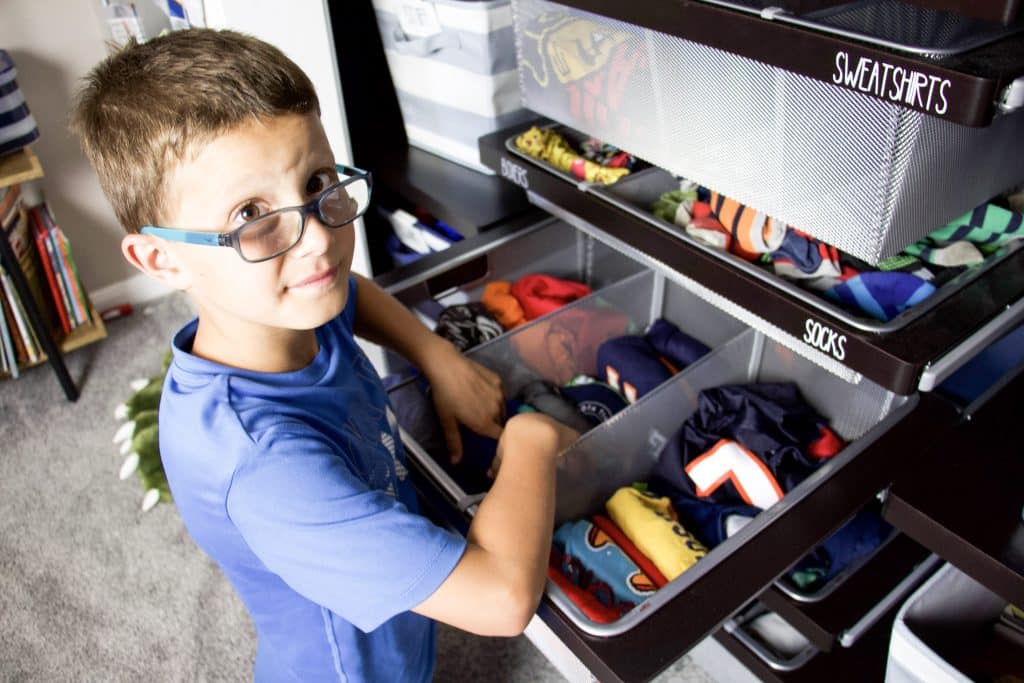
Our kids put away their own laundry. And they put their items away when they come home from school and activities.
Read more on how the family works together to keep things organized:
How To Get Your Kids To Put Away Their Laundry
Declutter Kid’s Bedroom For The One Room Challenge
The Organized Kids Workbook: Game-Changer for Managing Family Chaos

As you weave the art of organization into the fabric of your family life, you’ll begin to notice the ripple effects.
In this final section, we’ll discuss the long-term benefits, offer words of encouragement, and leave you with actions to celebrate the progress made.
Revisit the benefits of an organized home and reflect on the changes you’ve noticed.
Perhaps you’ve found more time to read bedtime stories, or maybe family meals are no longer a chaotic scramble.
These small victories are the building blocks of a bigger, more organized family life.
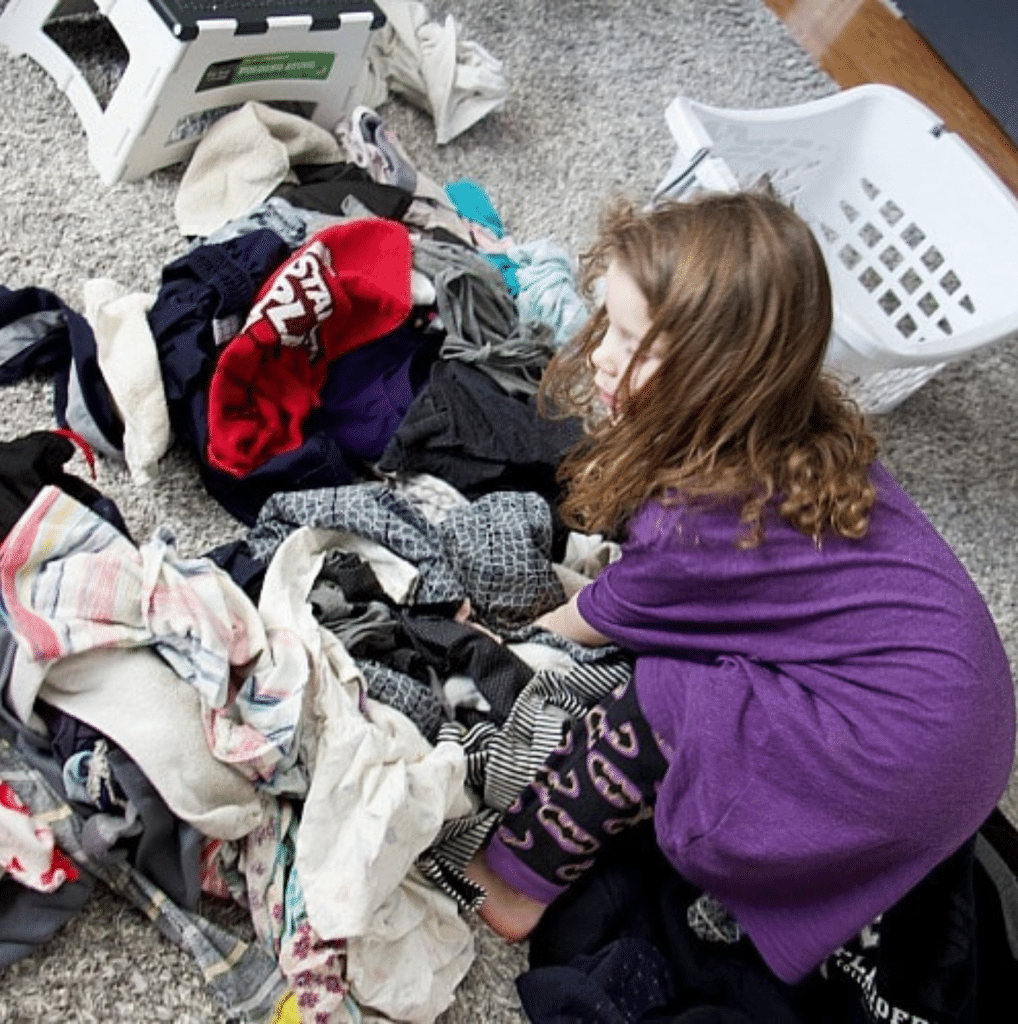
Take pride in the steps you’ve taken to bring order to your home.
Organization is not a destination but a continuous pursuit.
Remember that every day, you have the chance to make choices that contribute to the harmony of your family space.
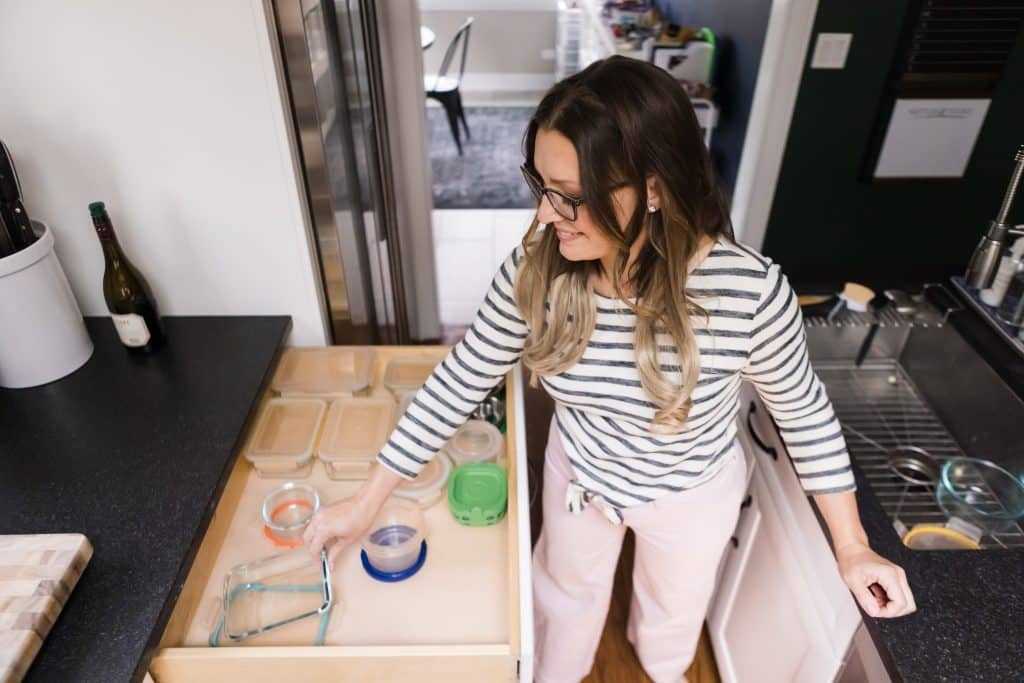
We believe in sharing knowledge and celebrating wins, no matter how small they may seem.
Whether you’re a first-time parent struggling to juggle a new routine or a seasoned pro looking to refine the family dynamic, this guide is your starting point.
The road to organization is as unique as the families traveling down it, but it’s a trip worth taking.
Ready to transform your home from a battleground of clutter to an oasis of serenity?
The adventure awaits, and we’re here to walk it with you.


